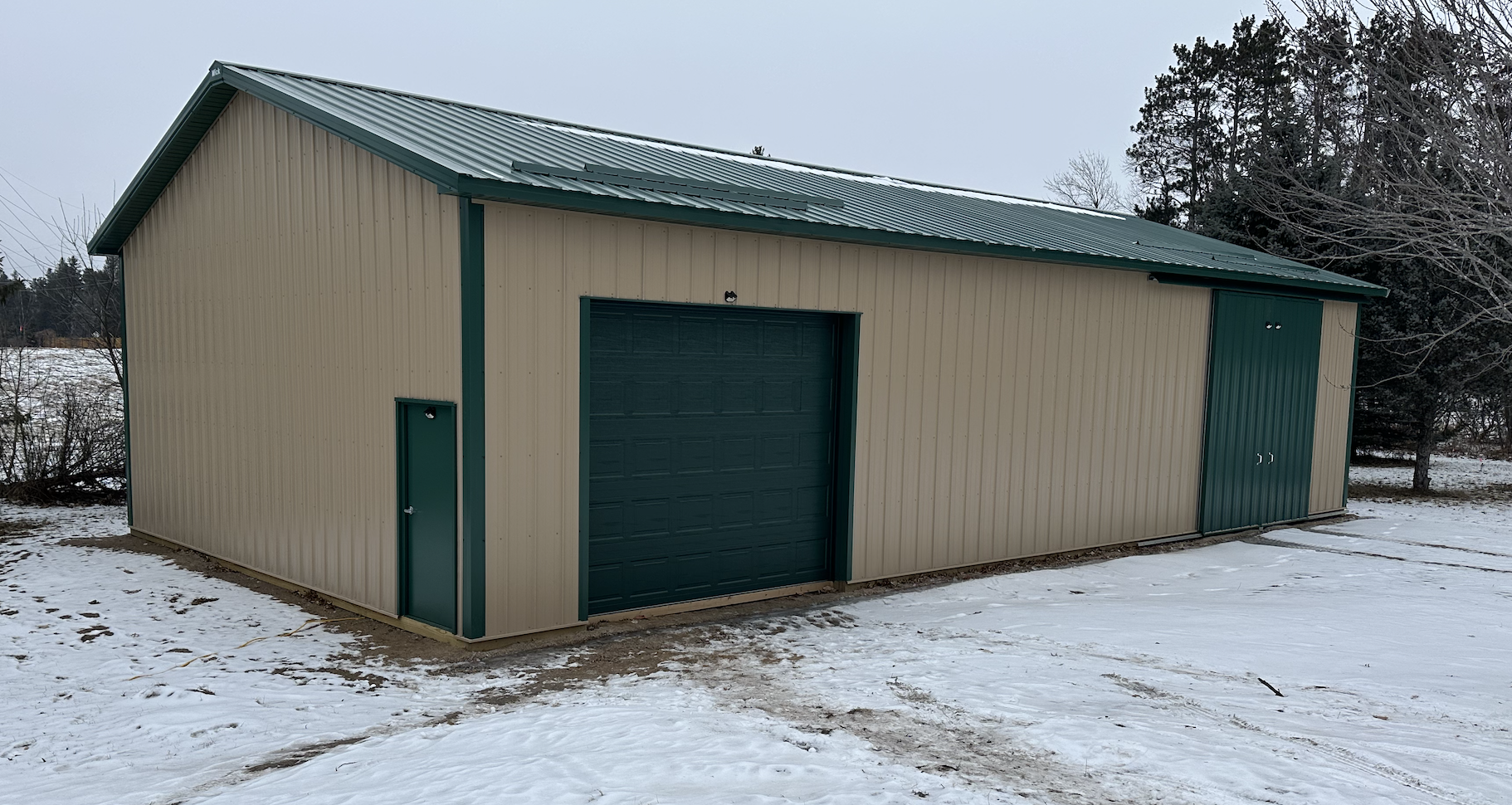
 If you are planning a new post-frame building, insulation should be part of the conversation from the beginning. Minnesota winters are long, cold, and demanding. Proper insulation turns a basic structure into a comfortable, energy-efficient space you can use year round.
Whether you are building a workshop, garage, commercial space, or hobby building, this guide explains the best pole barn insulation options in Minnesota, how they compare, and what makes the most sense for your goals.
Why Insulation Matters in a Minnesota Pole Barn
In Minnesota, winter temperatures regularly drop below zero. Without insulation, metal siding and roofing allow heat to escape quickly and condensation to form inside the building. This can lead to:
- Higher heating costs
- Moisture buildup
- Rust on metal components
- Mold or mildew issues
- Reduced comfort and usability
Proper insulation improves energy efficiency, protects your structure, and allows you to heat your building effectively.
Most Popular Pole Barn Insulation Options
There is no one-size-fits-all solution. The best insulation for your pole barn depends on how you plan to use the space.
Spray Foam Insulation
Spray foam is one of the most effective insulation options for Minnesota pole barns. It provides both high R-value and an air barrier in one application.
Benefits include:
- Excellent air sealing
- Strong moisture resistance
- High R-value per inch
- Adds structural rigidity
Spray foam is ideal for heated shops, commercial buildings, and barndominiums. While it costs more upfront than fiberglass, it delivers superior performance in cold climates.
Fiberglass Batt Insulation
Fiberglass batts are a common and budget-friendly choice. They are typically installed between framing members and paired with a vapor barrier.
Advantages include:
- Lower upfront cost
- Widely available
- Effective when installed properly
However, fiberglass must be installed carefully to avoid gaps. In Minnesota’s extreme temperatures, proper vapor barrier placement is critical to prevent condensation inside wall cavities.
Blown-In Insulation
Blown-in cellulose or fiberglass is commonly used in attic spaces of pole buildings with finished ceilings. It provides consistent coverage and works well when combined with wall insulation.
This option is ideal for:
- Heated workshops
- Office space within a larger pole barn
- Finished commercial interiors
Proper attic ventilation is important to maintain long-term performance.
Rigid Foam Board
Rigid foam board is sometimes used along foundation edges or beneath concrete slabs to reduce heat loss through the floor. In Minnesota, slab edge insulation can significantly improve comfort in heated buildings.
This is particularly valuable in:
- Radiant floor heating systems
- Commercial shops
- Residential-style barndominiums
Understanding R-Value for Minnesota Buildings
R-value measures insulation’s resistance to heat flow. Higher R-values mean better insulation performance.
In Minnesota, recommended insulation levels typically include:
- Walls: R-19 to R-30 depending on use
- Ceilings: R-38 to R-49
- Slab edge insulation for heated floors
The exact requirement depends on building use and local energy codes. A storage building may need minimal insulation, while a heated workshop requires much more.
Vapor Barriers and Moisture Control
Minnesota’s cold winters create condensation risks when warm interior air meets cold metal panels. A proper vapor barrier helps prevent moisture buildup inside walls and ceilings.
Key considerations include:
- Sealing around windows and doors
- Proper attic ventilation
- Air sealing around overhead doors
- Managing humidity levels in heated spaces
Moisture control is just as important as insulation thickness. Without proper air sealing, even high R-value insulation can underperform.
Heating a Pole Barn in Minnesota
If you plan to heat your building, insulation becomes even more important. Common heating options include:
- Forced air gas heaters
- Electric unit heaters
- Radiant floor heating
- Infrared tube heaters
Radiant floor heat is popular in Minnesota shops because it delivers consistent warmth and works extremely well when paired with slab insulation.
The more efficiently your building is insulated, the lower your monthly heating costs will be.
Insulate During Construction, Not After
While insulation can be added later, installing it during the original build is typically more cost-effective and efficient. Planning insulation from the start allows proper framing depth, vapor control, and energy performance.
Retrofitting insulation into an existing pole barn often requires removing interior panels or adjusting framing, which increases labor costs.
Choosing the Right Insulation Strategy
The right insulation system depends on how you plan to use your pole building. Ask yourself:
- Will the building be heated year round?
- Is it primarily storage or workspace?
- Do you plan to finish the interior walls?
- What is your long-term energy budget?
A clear plan allows your builder to recommend the best combination of insulation, vapor control, and heating.
Build for Minnesota’s Climate
Minnesota weather is demanding. Snow loads, wind exposure, and freezing temperatures all influence how a pole building performs. Proper insulation and moisture control ensure your building remains durable, comfortable, and energy efficient for decades.
If you are planning a new post-frame building and want it usable through every Minnesota season, insulation should be a priority. Consulting with an experienced local builder ensures your pole barn is designed specifically for Minnesota’s climate, not just built to minimum standards.
A well-insulated pole building is not just more comfortable. It protects your investment, lowers energy costs, and expands how you can use your space all year long.